
Dr. Mohamed Hassan and his group have recently achieved a potentially revolutionary breakthrough in the way we study the smallest building blocks of our universe. The development of the world’s fastest electron microscope will finally enable scientists to witness the movement of electrons in a way that no one thought would ever be possible. Scientists have tried in vain for many years to improve the electron microscope for the observation of these swift motions, and it has taken all these years until now, with this microscope dubbed the game-changer, based on the technology of attoseconds.
Traditional electron microscopes lacked the adequate speed to follow movements of the fastest subatomic particles. Even using all kinds of impressive techniques, it still was practically impossible to observe fast phenomena, like electron transitions in materials or chemical reactions. The latest development…it is indeed different. We can now track electron movements in real-time for the first time. It’s like opening a huge window to a world that we might have only imagined before. To slow down the fastest processes of nature and actually see what is going on in there—this is precisely what Dr. Hassan’s innovation accomplishes.
Stunningly beautiful is the way this is done: ultrafast electron pulses generated by pulsed laser technology. The pulses are like flashes of a high-speed camera but cudgeling the mind, for they last no longer than a few fractions of an attosecond, an interval so excruciatingly short as to baffle anybody. And now, thanks to this, we see our world appearing before our eyes. The fascinating thing is that we can actually see how electrons are moving between atoms in a chemical reaction. Think about it—seeing a chemical reaction at an atomic level in real time! This could change the paradigm for pharma and chemistry practice.
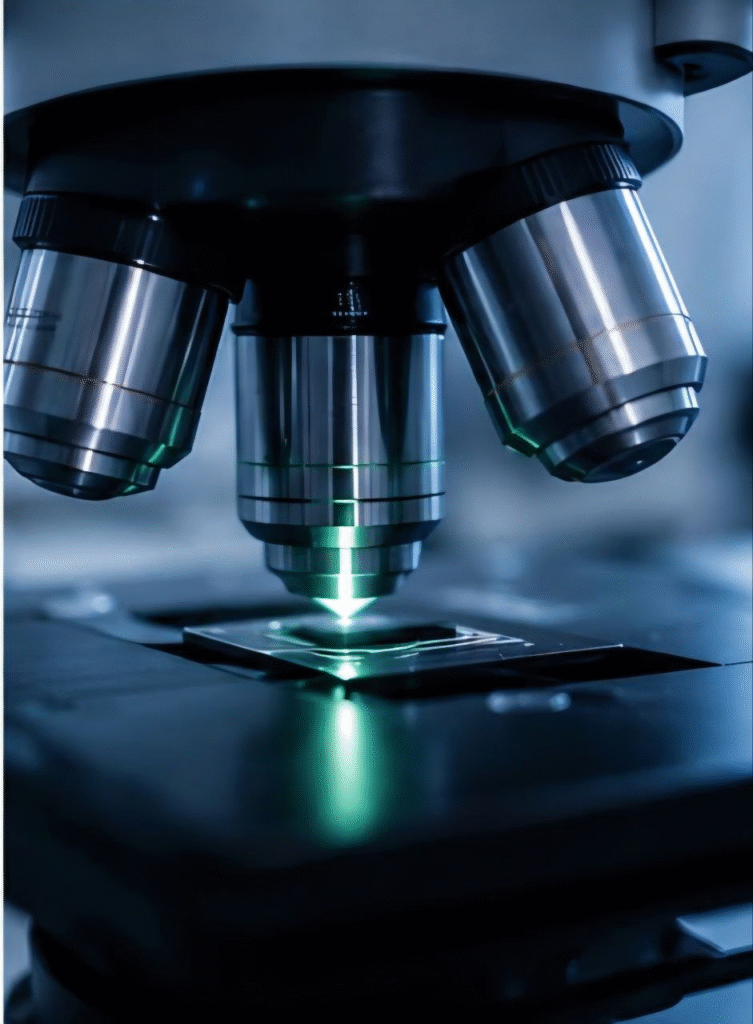
Suppose one day, scientists will be able to map the electron movements occurring within chemical reactions. With a little more understanding, we can make catalysts, which catalyze reactions, and work at the most efficient level. In that case, medicines may be improved upon, since treatments can be designed better with fewer side effects and more efficacy with better knowledge of the chemistry behind how these drugs work on cells. We could be talking here about a future in healthcare that we cannot even begin to comprehend.
Certainly, it was a journey to get there, one of effort, honesty, and sheer persistence. Dr. Hassan has worked on the development of short-pulse light sources for ultrafast imaging for quite some time now. Because of a combination of his extensive knowledge in lasers and quantum physics, Dr. Hassan created a tool that allows you to see particles moving in real-time. This truly illustrates the notion that scientific breakthroughs come after an incredibly long time of challenging the limits of what is known and determination not to give up.
This new microscopy holds immense potential. It could shift the paradigm for semiconductor research and give us unprecedented insights into how electrons move through nanomaterials. From here, we would be looking to faster and more efficient electronic chips that could lead to faster phones and computers, even helping us to usher in AI technology. Imagine if your devices went faster yet also consumed less energy. That would surely help in reducing electronic waste and environmental footprint, something we should all be concerned about now.
The new technology can either significantly help the energy sector or do nothing. This atomic-level view of energy movement through materials can serve as an advanced microscope to help scientists make more efficient solar cells and batteries. It may also help develop new high-temperature superconductors, which could revolutionize energy storage and distribution. In an increasingly cleaner world continuously searching for renewable and sustainable energy solutions, it could prove a game-changer. Designing less wasteful and high-energy-storing systems would indeed be a big step ahead in combating climate change.
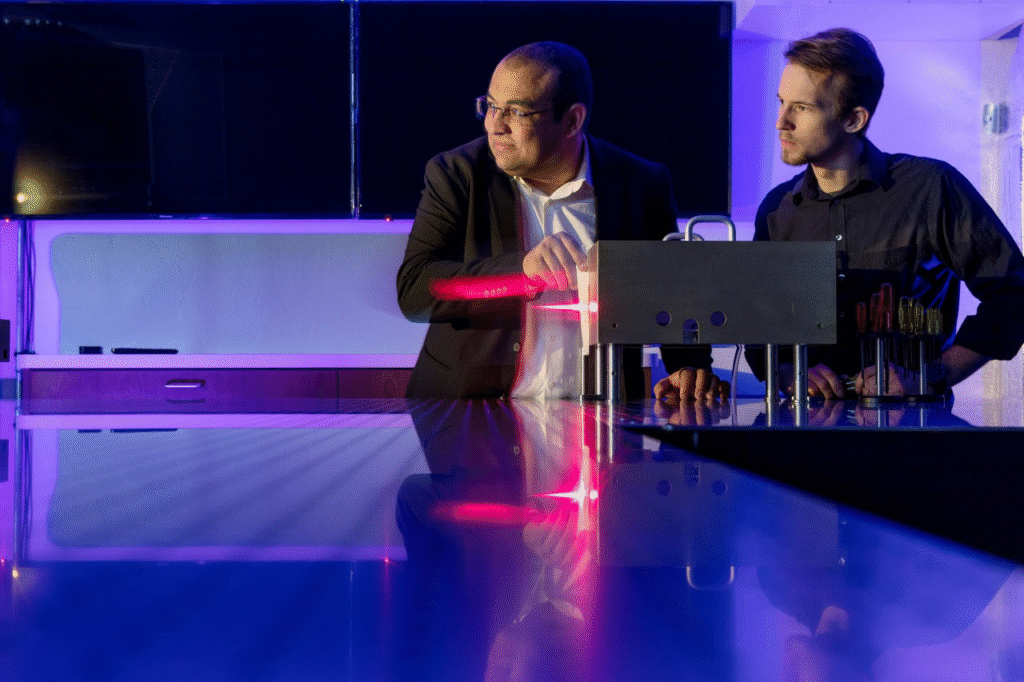
All this is pretty exciting but has its challenges. High price with complicated tasks and the need for specialized training make this technology less appealing for immediate application. But with the passage of time, like with all other revolutionary technologies, costs may start falling and the system may become easier to understand. Think how computers used to be: massive, expensive, and limited to a few experts. You can now carry one, and practically everybody owns one. With such imagination, this microscope could thus be compared to the way such technology matures.
What is more interesting is that it might enable discovering some of the deepest secrets buried in science. It might even be possible to study quantum phenomena such as entanglement for the first time or probe a particle’s behavior in superconductors in ways never before possible. It could even define a kind of chemistry based on the phenomenon of the same happening in inhospitable environments, such as within the walls of stars or out in the empty voids of space. The thought that we might unlock the universe’s secrets by observing things we’ve never been able to see is thrilling and almost humbling.

In fact, the prospect becomes huge when one envisions this technology being integrated with artificial intelligence. AI could analyze the tiny images within a shorter frame of time than any human possibly could. What is more, it might even show patterns that could lead to new discoveries in such fields as physics, chemistry, and materials science. And then once we add quantum computing to the equation, who knows what kind of breakthroughs we could see? The possibilities are endless, and it is hard to resist the excitement of what may come next.
As more and more continued research goes into it, imaging resolution becomes even sharper while images become more detailed, making this a very significant instrument in laboratories across the world. Science could already be sped into the future in ways that we cannot imagine today. It could change our lives through better energy, better medicines, and improved electronic devices we rely on. Together, Dr. Hassan and his team have not only carried the technology onward; they have provided another means of exploring and understanding the microscopic world.
What Dr. Hassan and his team achieved was not just to build a better microscope but to break new ground in viewing the most basic facets of the world from new angles. This marvelous optical instrument will allow us, the researchers, to see previously hidden phenomena, and the resultant discoveries could reformulate scientific knowledge. But this is just the beginning. Somehow the future in science feels brighter than ever because of innovators like Dr. Hassan, who are constantly challenging the boundaries of reality.